Hatch Forensic Institute
I Know This Much Is TrueHatch Forensic Institute is the maximum-security forensic hospital at the rear of Three Rivers State Hospital, and the institution that holds Thomas Birdsey for much of his long psychiatric confinement. Its guarded design, tightly controlled access, and court-supervised admissions make it more than a setting: it is where public fears about mental illness, legal judgments about risk, and Dominick Birdsey’s promise to care for his brother meet. Its eventual closure ends the last operating facility of Three Rivers State Hospital, but not the family grief associated with Thomas’s confinement and death.
Setting and Institutional Role
Hatch stands apart from the rest of the hospital grounds as a squat building of concrete and steel, encircled by chain link and razor wire. Its exterior has no windows. Inside, windows face a small circular courtyard that serves as the building’s central open space. The facility is divided into four independent units, each with its own security station. The courtyard has picnic tables and a basketball hoop, but patients’ access to it is limited: twice daily, one unit at a time, selected patients may go out for twenty minutes. The schedule makes even a brief interval outdoors dependent on institutional permission and routine.
The hospital’s population includes people whose cases have drawn public attention as well as patients with less publicized difficulties. The novel describes individuals brought there after episodes involving severe disturbance, alongside people whose behavior has left them with few other places to go. Hatch’s function is therefore not confined to the most notorious cases. It is a destination for people whose needs and conduct are managed through a system of secure, long-term care. Although some patients improve and are released, the prevailing pattern is that people enter and remain; the surrounding town is portrayed as more comfortable with confinement than with the uncertain work of rehabilitation.
Thomas’s Admission and the Legal Process
Thomas arrives under police escort after a crisis that has led to his admission at Shanley Memorial Hospital. A surgeon there initiates a Physician’s Emergency Certificate, the legal mechanism under which Hatch initially receives him. At the front gate, Thomas continues to insist that his act was a sacrifice. The cruiser passes through the gate and brings him to a double door identified as the entrance for patients being received into Unit Two. The scene establishes the abrupt change from family emergency to a security-controlled institutional process.
Dominick is initially allowed inside to accompany his brother through part of the admission, but staff stop him at the security station. He cannot enter the ward, and any attempt to speak with the doctor must wait until morning. The boundary is both physical and procedural: Dominick can remain involved as family, but he cannot follow Thomas into the place where decisions about his care will be made. When he leaves, he is already planning how to get his brother out, even imagining extraordinary means of escape. His reaction shows how Hatch’s restrictions are experienced by the family, before he understands the legal timetable governing Thomas’s stay.
A social worker explains that the emergency certificate allows a fifteen-day observation period. During those days, the hospital must assess whether Thomas presents a danger to himself or others; after the observation period, his case is expected to go before probate and then, most likely, the Psychiatric Security Review Board. The minimum period is not something Dominick can overturn through an immediate appeal to staff. The process shifts the question of release from family preference to medical and judicial assessment, while leaving Dominick to wait outside the ward and try to understand what will happen next.
Security, Care, and Public Fear
Dr. Patel acknowledges that Hatch’s security measures may make it especially difficult for a person with paranoia. The constant monitoring and security checks that are necessary in a maximum-security hospital can intensify the sense of being watched. She also challenges the image of Hatch as simply a chamber of horrors: she recognizes that problems occur on the wards and that patients do not want to be there, while maintaining that the care is generally humane. Her account does not erase the institution’s coercive structure. Instead, it holds together the strain of surveillance, the reality of ward problems, and the possibility of decent care within a restrictive setting.
The hospital’s public role is shaped by fear of people with mental illness. Dr. Patel recalls the political consequences of the Jimmy Lane case, in which a man on a supervised day outing wandered away and killed a child despite having no prior record of violence. Public anger and sensational coverage reinforced the stereotype of mentally ill people as latent killers. The insanity defense then became politically contentious, and the system itself came under attack. The account places Hatch within a culture inclined to treat security and containment as answers to public fear. It does not establish that this case changed a particular Hatch policy; rather, it shows the wider political climate in which forensic institutions and decisions about release are judged.
Confinement and Family Visits
After the initial fifteen-day period, Thomas’s case reaches the Psychiatric Security Review Board. The board votes unanimously to retain him for a year, citing the possibility that he could endanger himself or others. A further review is scheduled for October 1991, when the board is to decide whether he should be released or held for another twelve-month period. The process gives his confinement a defined review point, but leaves his family facing the possibility of another year in custody. Dominick later blames himself for missing Thomas’s hearing after falling from a roof, convinced that his absence helped send his brother into long-term confinement. Dr. Patel questions that conclusion and argues that Dominick’s promise to his dying mother has exacted too high a personal cost, contributing to his unhappiness and suicidal crisis.
The visiting routine makes the distance between the brothers tangible. Dominick must pass through a metal detector and be escorted to a visiting room. Thomas describes ordinary details of his day, including what he has eaten, alongside his recurring belief that someone is trying to assassinate him. Within minutes, he asks whether Ray has visited and whether Ray is angry with him. The question reveals that Thomas’s concern about his stepfather persists despite his own confinement, and that visits are also a way of measuring who in the family has come and who has stayed away.
Dominick’s visits are burdened by guilt about his and Ray’s part in Thomas’s life and by the physical consequence of Thomas’s self-amputation. He struggles to keep his attention on Thomas’s eyes rather than the absence of his hand, while believing that he and Ray helped bring about the act. He describes the institution’s smell clinging to his clothes and car after visits, an image of how confinement follows him back into ordinary life. In therapy after Thomas’s funeral, Dominick also recounts a childhood family secret: he had told Ray where his mother and Thomas were when Ray returned home unexpectedly. His later breakdown in the session, repeating Thomas’s plea to be let out, connects the locked institution to an older history of secrecy, fear, and complicity in the Birdsey household.
Release, Closure, and Significance
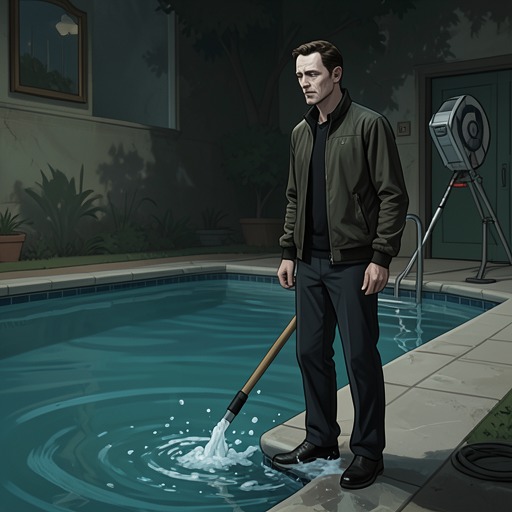
Thomas is eventually released from Hatch after seven months, but his freedom does not bring a lasting recovery or reunion. He later drowns, most likely by suicide, leaving Dominick to confront the loss after years in which caring for Thomas had seemed inseparable from navigating the institution. Hatch is not presented as the sole cause of Thomas’s death; its significance lies in how its confinement and review procedures shape the brothers’ final years and Dominick’s sense of responsibility. Dominick’s later anger at the institution coexists with his recognition that the promise to protect Thomas had also damaged his own well-being.
In February 1994, after a three-month trial, Richard Hume and four other physician-administrators are cleared of negligence charges concerning the spread of AIDS and HIV at Hatch. The hospital’s 127 remaining inmates are transferred to Middletown, and Hatch, the last operating facility of Three Rivers State Hospital, ceases to exist. The ending is administrative rather than restorative: patients are moved, the facility closes, and the institution’s history remains bound to the question of what secure care can offer when protection, treatment, and confinement are difficult to separate.